





I am a Postdoctoral Research Associate in the Department of Earth, Environmental, and Planetary Sciences at Brown University. My research is focused on uncovering the signature of environmental conditions on planetary surfaces from the grain- to landscape scale. My research themes include:
Characterizing River-Dune Interactions
Rivers and windblown dunes record the time-integrated interactions between a planet's surface and its hydrosphere and atmosphere, respectively. How these systems interact with one another is understudied. This series of projects asks 1) Under what conditions can dunes cross ephemeral rivers? and 2) How is the signature and timing of fluvial activity recorded in dune crestlines? Broadly, we seek to understand the enigmatic climate history of Saturn's moon Titan using the Namib Sand Sea as an analogue.
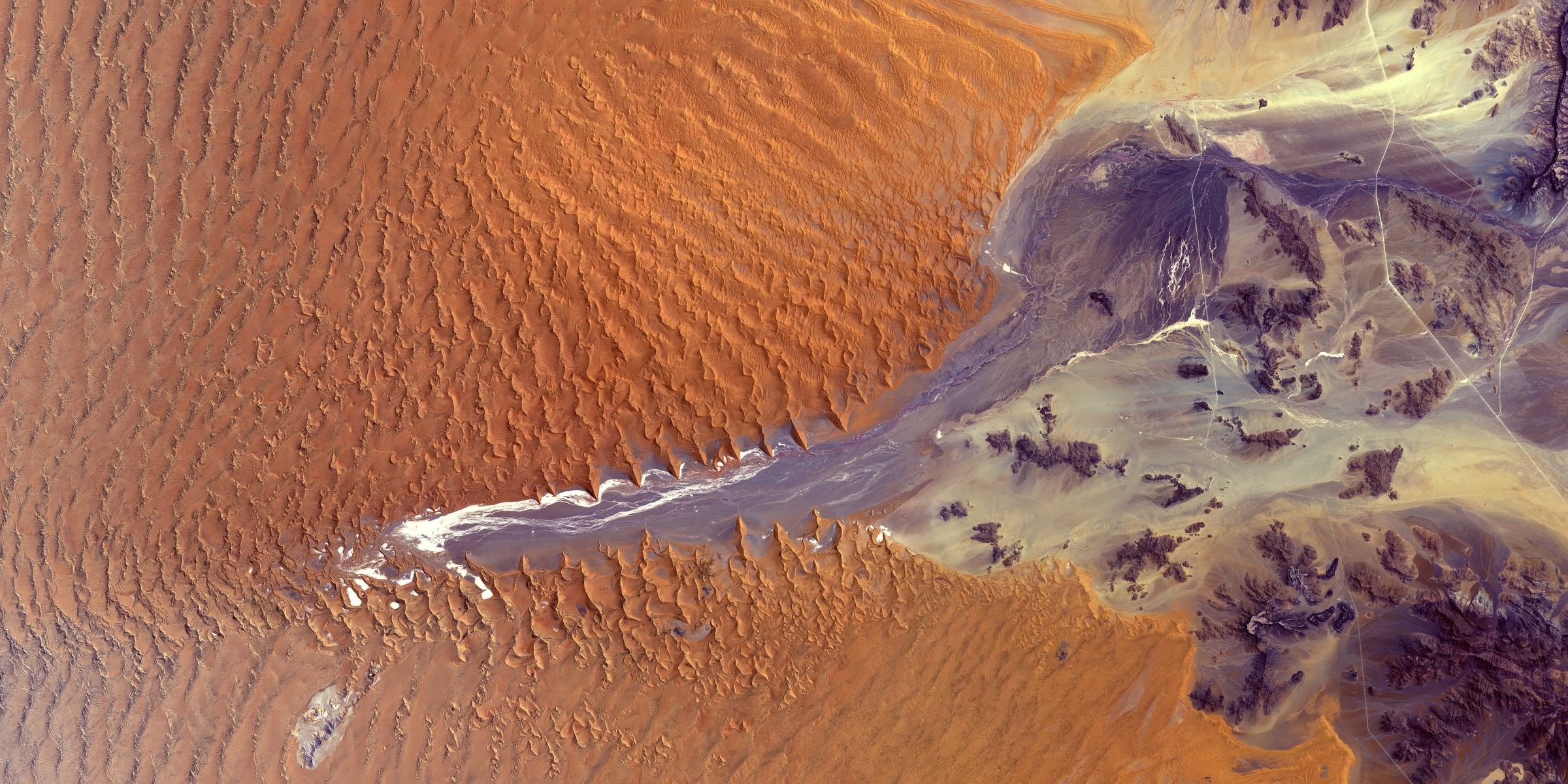
Credit: Contains modified Copernicus Sentinel data (2019), processed by ESA. CC BY-SA 3.0 IGO.
Environmental Conditions Recorded in Sand Dune Patterns
The patterns formed by dune crestlines are readily observed in orbital images. As the dune field evolves, dune spacing and size increase and the spatial density of collisions decreases. However, when environmental conditions change, dunes break apart and reorient, resulting in transient pattern disorganization. Pattern disorganization can be localized (due to, e.g., topography or changes in sediment supply or availability) or recent in time (i.e., wholesale pattern reorganization due to a change in wind regime). Pattern disorganization, combined with rudimentary constraints on dune response time, provide the opportunity to probe the signature of past climate and surface conditions on other planetary bodies (Marvin et al., 2023). For example, Titan's equatorial belt of dunes becomes better organized with distance downwind from the Xanadu region, all the way around the moon to the other side of Xanadu. This suggests that Titan's dune fields are linked, forming the largest known dune field in the Solar System, with implications for the material properties of Titan's sand grains (Marvin et al., 2025).
Relevant Work: Marvin et al., 2023; Marvin et al., 2025
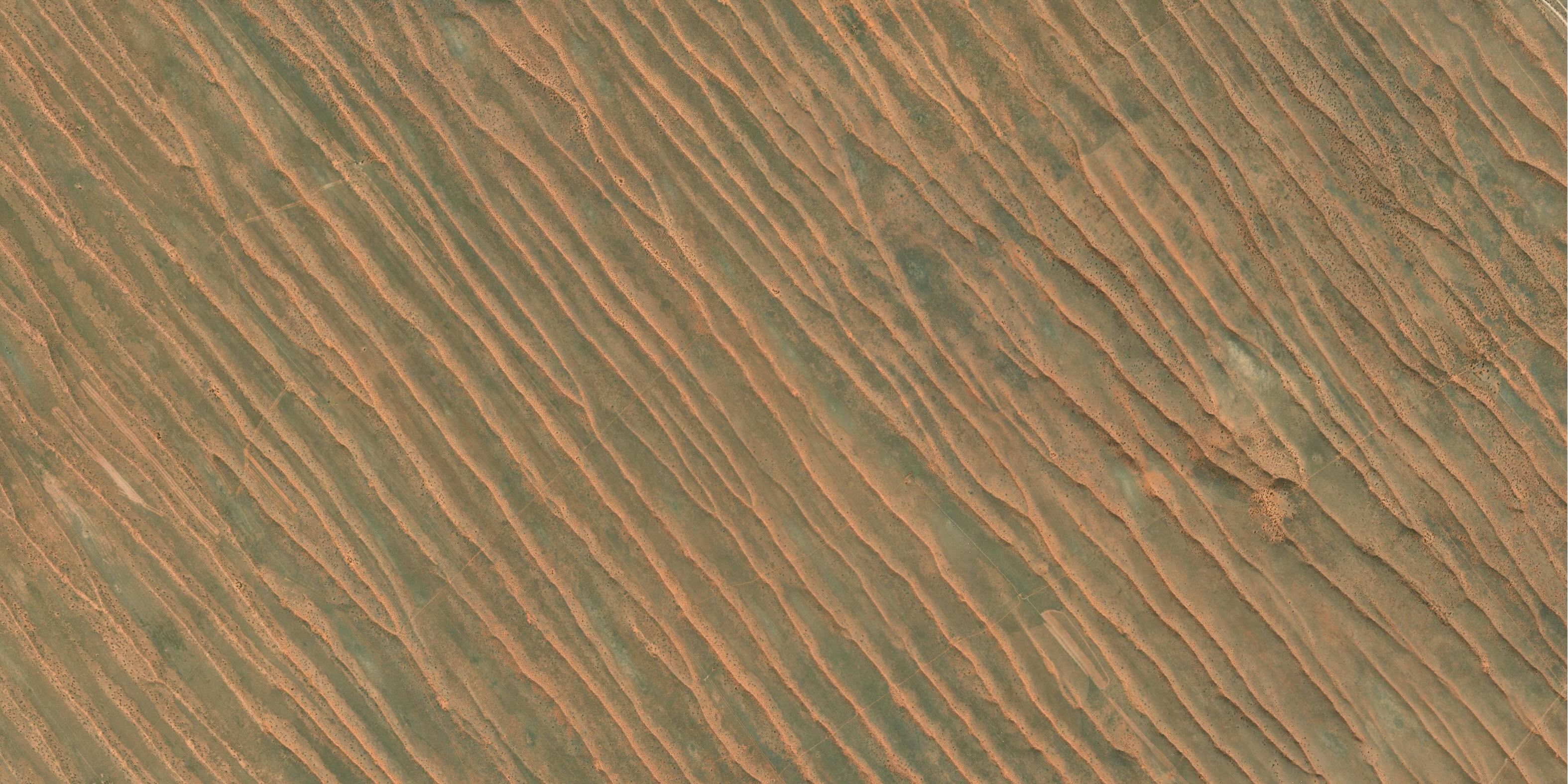
Credit: ESRI.
Environmental Conditions Recorded in Sand Dunes
Dunes reflect their formative conditions. For example, dune type is largely dependent on the wind variability and sediment availability. In contrast, the formative flow magnitude is encoded in the channel geometry of alluvial rivers, whose width, depth, and slope adjust to 'bankfull' flow, the flood whose frequency and magnitude maximizes sediment transport. Bankfull flows narrowly exceed the threshold of motion. Dune fields have also been proposed to be 'near-threshold' systems. I show that, globally, windblown dune fields ranging orders of magnitude in size and wind directionality are born in near-threshold conditions due to the rapid dropoff in frequency with increasing wind magnitude. This contrasts with alluvial rivers which evolve to a near-threshold state. We find that the formative wind speed of dunes can be estimated from grain size, readily measured in ancient sandstones and on other planetary bodies like Mars.
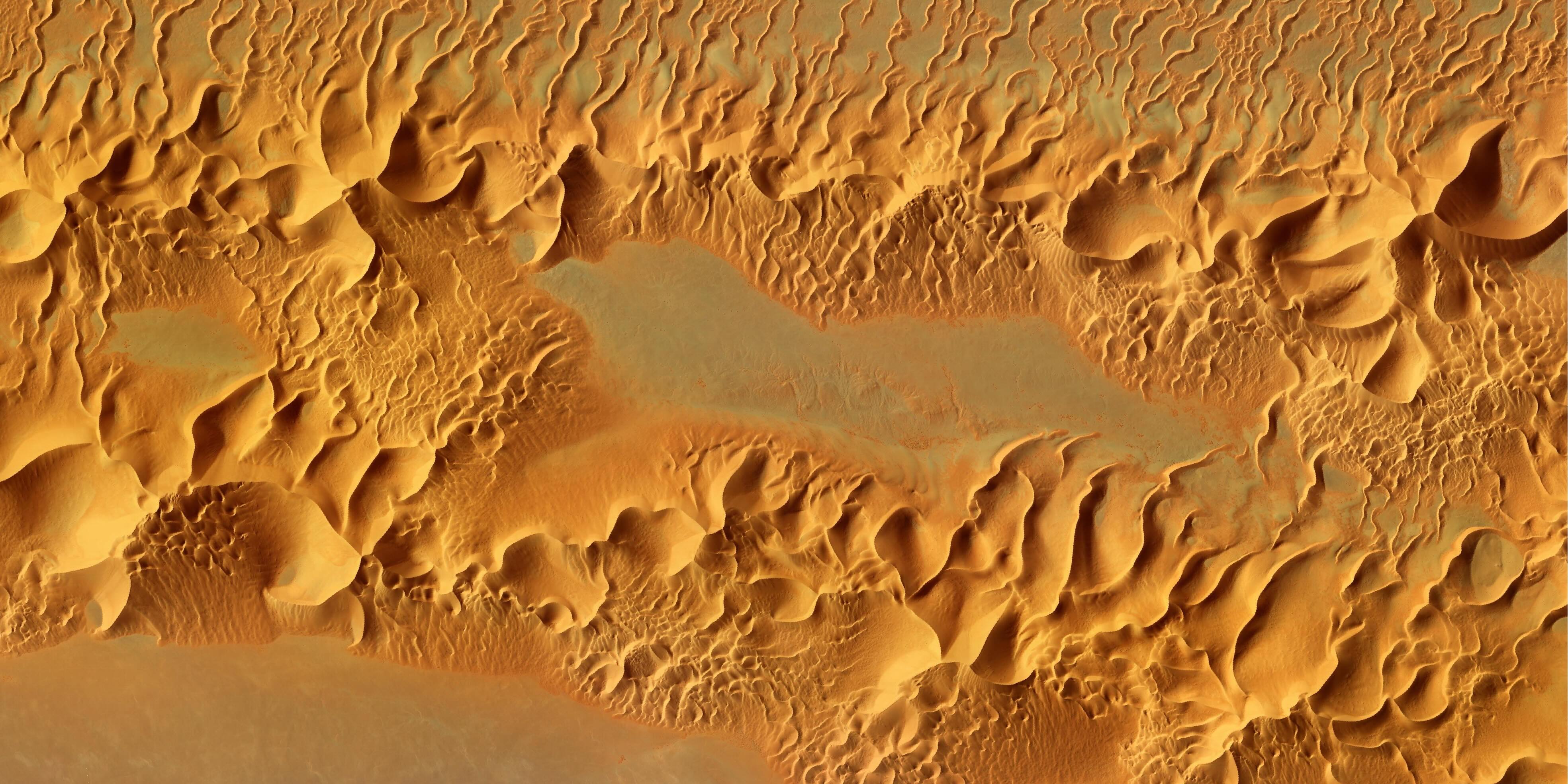
Credit: ESRI.
Sand Microtextures
Sand is ubiquitous at Earth's surface. The different processes that transport sand across Earth's surface shape and texture grains differently, such that the surface morphology of grains from different depositional environments (e.g., aeolian vs. fluvial) is distinct. This approach is applicable to sedimentary rocks as well. However, traditional microtextural analysis techniques are time consuming, subjective, and reduce inter-sample variability to a single data point. The SandAI classifier produces an automated classification of single-grain images of quartz sand, providing an objective methodology that characterizes the relative influence of multiple environments on the same grain (Hasson et al., 2024). However, the likelihood of quartz recrystallization due to diagenesis and metamorphism increases with depositional age, limiting this technique to younger sedimentary rocks. Hence, I developed the first catalogue of microtextures on zircon sand grains, which are more resistant to recrystallization. This technique can be applied to rocks that record Earth's earliest surface environments (Marvin et al., 2026). Further, this approach is now automated using SandAI-Z (Hasson et al., 2026).
Relevant Work: Hasson et al., 2024; Marvin et al., 2026; Hasson et al., 2026
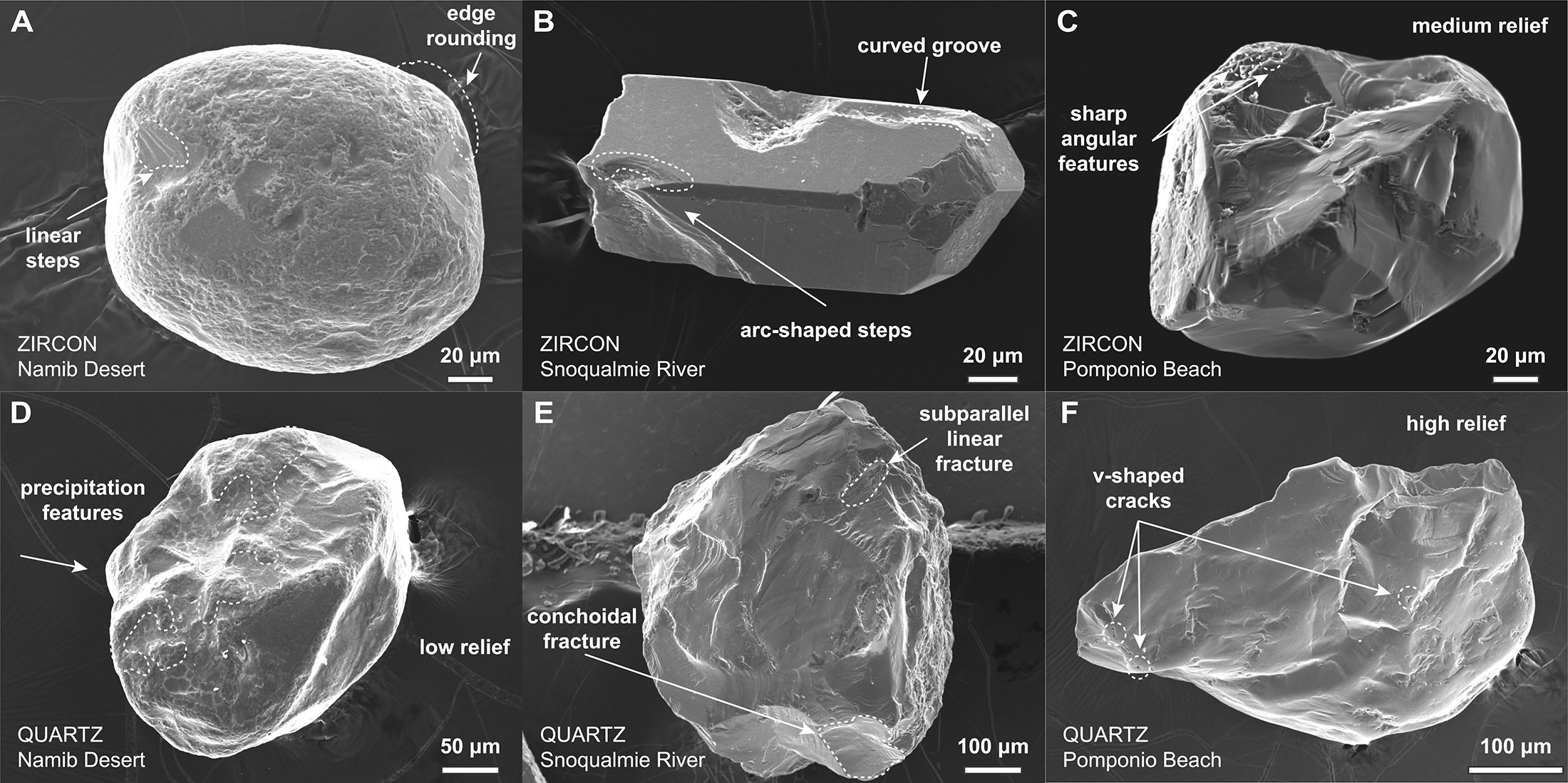
Credit: Marvin et al. (2026).
Other Research Themes
In addition to my main research avenues, I am also interested in understanding the deposits of unvegetated meandering rivers (Hasson et al., 2023), coastal foredunes (Hilgendorf et al., 2021), glacial outburst floods (Blaske et al., in review; in prep), and the record of Earth's earliest dune systems (Colicci et al., in prep).